

Table of Contents
- Why Senior Doodles Need Joint Support
- Signs of Arthritis in Dogs: What to Watch For
- Key Ingredients That Actually Support Joint Function
- Best Joint Supplements for Senior Dogs: What Sets Them Apart
- How to Help an Older Dog with Joint Pain Beyond Supplements
- Low-Impact Exercise for Senior Dogs: Daily Comfort Strategies
- Choosing the Right Supplement: Dosage, Safety, and Realistic Expectations
- Frequently Asked Questions
Last Updated: October 21, 2026
Why Senior Doodles Need Joint Support
Senior doodles face unique joint challenges: their larger frame and the genetic predispositions of both parent breeds make them susceptible to joint stress and mobility issues that benefit from joint relief senior doodles deserve.
Doodles stay active well into their senior years, and that spirited nature can accelerate joint wear if cartilage and connective tissues aren't supported. The right ingredients, delivered consistently, maintain flexibility and comfort.
Joint relief senior doodles need isn't about stopping time, it's about slowing decline and keeping your dog moving, playing, and enjoying life without stiffness holding them back.
Signs of Arthritis in Dogs: What to Watch For
Arthritis in senior dogs develops gradually, and early signs are easy to miss. Your doodle might slow down on walks, hesitate before jumping, or take longer to settle, signals that joint support would help.
Watch for these specific changes:
- Stiffness after rest: Your dog struggles to stand or move smoothly after sleeping or sitting for extended periods
- Reluctance to exercise: They avoid stairs, jumping, or activities they once loved
- Limping or favoring a limb: Especially noticeable after activity or in cold weather
- Difficulty rising: They need extra time or effort to get up from a lying position
- Reduced range of motion: Visible decrease in how far they can stretch or bend their joints
- Behavioral changes: Increased irritability, whimpering during movement, or reluctance to be touched in certain areas
These signs don't mean your dog's mobility journey is over, they mean joint support, through supplements, exercise adjustments, or both, can help. Early intervention beats waiting until arthritis becomes severe.
Key Ingredients That Actually Support Joint Function
Not all joint supplements are created equal, the ingredients and the science behind them matter enormously.
Glucosamine and Cartilage Support
Glucosamine is one of the most researched joint-support ingredients for dogs, helping maintain cartilage structure and function while slowing age-related breakdown.
The form matters: glucosamine hydrochloride and glucosamine sulfate are both used in quality supplements, though absorption varies. Look for supplements that state the form and provide consistent dosing.
Hydrolyzed collagen, often paired with glucosamine, provides additional structural support via amino acids that aid cartilage rebuilding. Mobile Dood Soft Chews combine glucosamine with hydrolyzed collagen to target both cartilage maintenance and joint flexibility.

Chondroitin and Joint Mobility
Chondroitin works alongside glucosamine, helping cartilage retain water to keep joints lubricated and flexible while enhancing shock absorption and reducing friction.
MSM and Inflammation Reduction
Methylsulfonylmethane (MSM) is a sulfur compound that supports joint health and helps manage inflammation naturally, maintaining connective tissue integrity and comfort in aging dogs.
Omega-3 Fatty Acids, EPA, and DHA
Omega-3 fatty acids, particularly EPA and DHA, provide systemic anti-inflammatory support benefiting joints, skin, coat, heart, and brain, supporting overall wellness rather than working directly on cartilage.
Fish oil is the most bioavailable source of EPA and DHA for dogs. Slick Dood Salmon Oil delivers pure wild-caught Norwegian salmon oil rich in these fatty acids, complementing joint-specific supplements with support that extends to overall vitality.
Joint-specific supplements address cartilage and connective tissue directly, while omega-3s provide foundational anti-inflammatory support. Most senior doodles benefit from both.
Best Joint Supplements for Senior Dogs: What Sets Them Apart
The supplement market is crowded and most products make similar claims.
Mobile Dood Soft Chews combine hydrolyzed collagen, glucosamine, chondroitin, MSM, Omega-3s, and Vitamin C. At $33.50 per bottle, they're a middle-ground investment.
The soft-chew format matters: dogs that refuse capsules will consume soft chews consistently, and consistency is where real results come from.
For a separate omega-3 source, Slick Dood Salmon Oil at $35.00 provides pure, concentrated EPA and DHA without fillers.

The common mistake is treating supplements as a one-time purchase.
How to Help an Older Dog with Joint Pain Beyond Supplements
Supplements are one tool, not the whole picture. Think of joint care as a stack: supplements support cartilage and inflammation over weeks, while environmental and lifestyle adjustments deliver relief today.
Build traction into the home
Slippery floors are one of the most overlooked sources of strain for aging dogs. A doodle scrambling on hardwood or tile braces and slips every time it crosses a room, stressing hips and knees. Area rugs, runners along main paths, and non-slip mats at bowls reduce that daily micro-strain.
Make rest easier on joints
Dogs spend most of their day lying down, so bedding matters. Orthopedic foam beds distribute weight and reduce pressure on hips and elbows, and low-profile beds are easier to step into. Place beds in warm, draft-free spots near the family's main living area.
Remove the jumps
Ramps and steps to furniture and vehicles spare joints repeated jumping impact. Choose a ramp with a non-slip surface and gentle slope; steep or wobbly ramps can be worse than none. Raise bowls to chest height and keep essentials on one level where possible.
Manage weight as joint medicine
Every extra pound increases the load on hips, knees, and shoulders. Even modest loss, roughly 5-10% of body weight, can noticeably improve mobility and reduce pain. Your veterinarian can recommend caloric adjustments and a target weight; measure food rather than free-feeding, and count treats in the daily total.
Keep movement gentle and consistent
Short, frequent walks are ideal, three 10-15 minute walks daily beat one long walk because they maintain movement without overloading joints. Swimming and hydrotherapy are exceptional for senior dogs with joint issues because water supports body weight while allowing full range of motion; even once-weekly sessions provide significant benefits.
Consider rehabilitation and professional support
Veterinary rehabilitation, often delivered by a credentialed rehab practitioner, can include therapeutic exercise, controlled leash walks, and modalities such as laser therapy or underwater treadmill work. Ask your veterinarian whether a referral makes sense, especially after surgery or a flare-up; a rehab plan is tailored to your dog's specific limitations.
Temperature and routine
Cold, damp weather often increases stiffness in arthritic dogs. Keeping your doodle warm during winter, through sweaters, heated beds, or more time indoors, can meaningfully reduce symptoms. Keep routines predictable: sudden activity spikes after a quiet stretch commonly trigger soreness.
Layer support rather than choosing one approach
The most effective plan combines supplements, home adjustments, weight management, and gentle exercise. Supplements address cartilage and inflammation over weeks; traction, bedding, ramps, and weight control reduce daily strain immediately. Doing both gives your senior the best chance at comfortable, active days.
Low-Impact Exercise for Senior Dogs: Daily Comfort Strategies
Movement is essential for senior doodles, but type and intensity matter enormously.
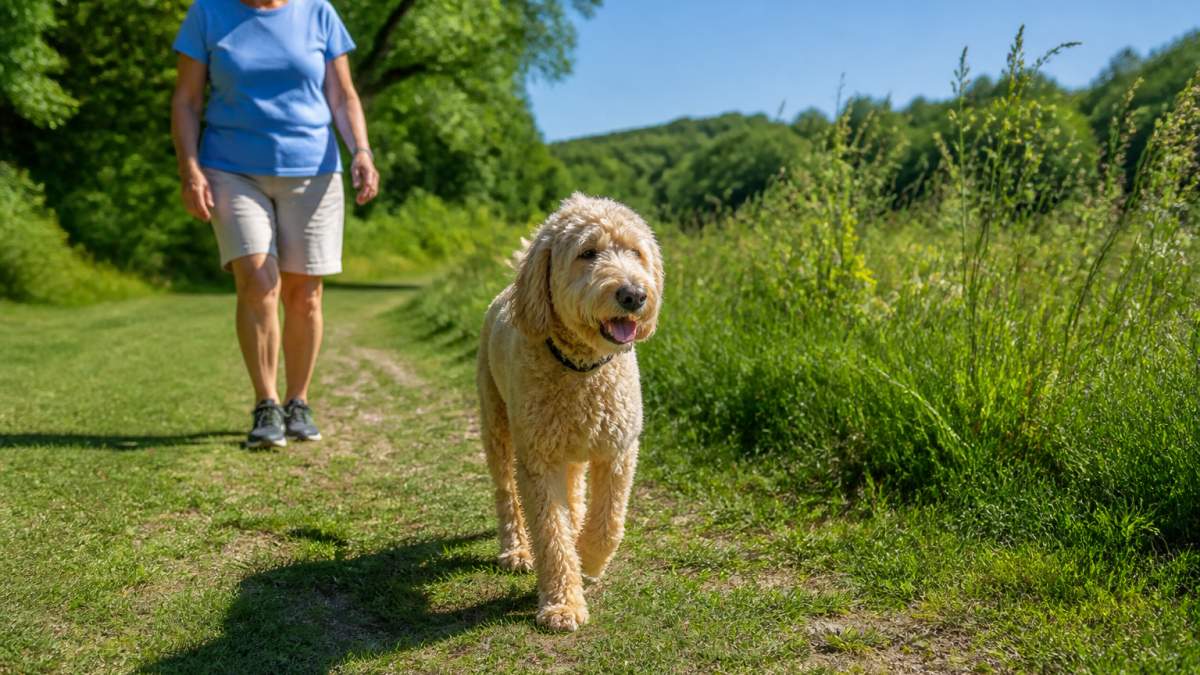
Short, frequent walks are ideal. Three 10-15 minute walks daily are better than one long walk because they maintain movement without overloading joints.
Swimming and hydrotherapy are exceptional for senior dogs with joint issues.
Gentle play that doesn't involve jumping keeps your doodle engaged.
Avoid extreme temperatures during exercise: heat raises overexertion risk, while cold increases stiffness. Early morning or evening walks in moderate weather are ideal.
Choosing the Right Supplement: Dosage, Safety, and Realistic Expectations
Supplement selection requires honesty about what results look like, plus a repeatable way to compare products rather than choosing on marketing claims. Joint supplements slow decline and improve comfort; they do not reverse arthritis.
Read the label like a comparison shopper
The front of a bottle tells you what the marketer wants you to feel; the back panel tells you what you're actually buying. Compare products on these four numbers:
- Active amount per serving, not per ingredient list. A label that lists glucosamine, chondroitin, and MSM but does not state milligrams per chew or per scoop gives you nothing to compare. Look for guaranteed analysis values per serving.
- Serving size versus your dog's weight. A chew sized for a 25-pound dog is not the same dose as one for an 80-pound doodle. Check the weight-based directions and confirm the bottle's serving matches your dog's band.
- Number of servings per container. This is how you calculate cost per daily serving, the only fair price comparison between a $20 bottle and a $40 bottle.
- Form and delivery. Soft chews and powders are easiest for picky senior doodles; capsules suit dogs that swallow pills. The best format is the one your dog will actually take every day.
A simple scoring framework
When two products look similar, score each on a 1-5 scale across these dimensions:
| Dimension | What to check |
|---|---|
| Evidence | Are the ingredients ones with meaningful research behind them (glucosamine, chondroitin, omega-3s) versus trendy fillers? |
| Amounts | Are active milligrams stated per serving and aligned with weight-based directions? |
| Safety and transparency | Is there a quality-testing statement, a lot number, and a clear contact for questions? |
| Format fit | Will your dog reliably consume this form? |
| Cost per daily serving | Total price divided by servings at your dog's dose. |
| Size suitability | Does the product offer directions for your doodle's weight band? |
A product that wins on price but loses on stated amounts and testing is not a bargain. One that wins on evidence and transparency may be the better long-term value if your dog actually takes it.
Dosing: follow weight, then confirm with your veterinarian
Dosage depends on your dog's weight and the product's concentration. Start with the label's weight-based directions, and don't stack multiple glucosamine products without checking total intake. Overdosing won't accelerate results; it wastes product and can cause digestive upset. Consistent dosing at the recommended level is what works.
Because senior doodles often take other medications or have existing conditions, ask your veterinarian to review any new supplement against your dog's current regimen before you start.
Realistic timelines and what to watch
Your senior doodle might climb stairs more readily, show less stiffness after rest, or play with more enthusiasm.
Occasional mild digestive adjustment (loose stool or slight nausea) sometimes occurs in the first few days but typically resolves quickly. If issues persist or worsen, discontinue and consult your veterinarian.
| Consideration | Recommendation |
|---|---|
| Dosage frequency | Daily, at the dose recommended for your dog's weight |
| Timeline to results | 6-8 weeks of consistent use before assessing effectiveness |
| Best format for picky eaters | Soft chews or toppers mixed into food |
| Complementary support | Low-impact exercise, weight management, environmental adjustments |
| When to add omega-3s | Simultaneously with joint-specific supplements for comprehensive support |
| Safety monitoring | Watch for digestive upset in first week; consult vet if persistent |
Realistic expectations matter. Your senior doodle won't regain the mobility of youth, but they can maintain comfort, keep enjoying activities they love, and avoid the rapid decline untreated joint issues cause.
Frequently Asked Questions
How long does it take for a joint supplement to work in senior dogs?
Results depend on the dog's age, severity of joint issues, ingredient quality, and dosage. Glucosamine and chondroitin support cartilage structure over time, while omega-3 fatty acids work on inflammation. Consistency matters more than speed, skipping doses delays results.
What's the difference between glucosamine, chondroitin, and MSM for joint health?
Glucosamine helps rebuild cartilage and supports joint cushioning. Chondroitin works alongside glucosamine to maintain cartilage structure and reduce breakdown. MSM reduces inflammation and may ease pain associated with arthritis. Many effective joint supplements combine all three because they work synergistically. Your senior dog benefits most when all three ingredients are present at adequate serving sizes.
How do I know if my senior doodle has joint pain or arthritis?
Watch for stiffness after rest, reluctance to jump or climb stairs, limping, difficulty rising from lying down, and reduced activity. Some dogs show behavioral changes like irritability or reluctance to be touched. Hip and joint discomfort often worsens in cold weather. If your doodle shows these signs, consult your veterinarian before starting supplements. Early intervention with joint support and low-impact exercise can slow progression.
Can supplements alone fix my senior dog's joint problems?
Supplements support joint health and mobility but work best alongside other strategies. Low-impact exercise, maintaining healthy weight, orthopedic bedding, and veterinary guidance are equally important. For dogs with advanced arthritis, supplements may reduce inflammation and support comfort without reversing damage. Realistic expectations matter: supplements slow decline and improve quality of life, but they're part of a complete approach, not a standalone cure.