

Table of Contents
- Do Dog Probiotics Survive Stomach Acid?
- How Probiotics Work in Your Dog's Gut
- Probiotic Strains for Dogs and Acid Resistance
- Best Time to Give a Dog Probiotics
- How Long Do Probiotics Take to Work in Dogs
- Dog Probiotics for Diarrhea and Digestive Issues
- Choosing a Probiotic Your Dog Will Actually Take
- When to Talk to Your Veterinarian
- Frequently Asked Questions
Last Updated: October 19, 2026
Do Dog Probiotics Survive Stomach Acid?
Whether dog probiotics survive stomach acid is a fair concern: your dog's digestive system is acidic by design. The short answer: yes, many can, but not all formulas are equal.
Probiotics are live beneficial bacteria that support digestive health. When live active cultures reach your dog's gastrointestinal tract, they help restore microbial balance, improve nutrient absorption, and strengthen immune function.
How Probiotics Work in Your Dog's Gut
When probiotics enter your dog's digestive system, they face stomach acid, which is naturally acidic to break down food and kill harmful bacteria. This environment can damage or kill probiotic bacteria if they're not protected.
Surviving bacteria reach the less acidic intestines, where they colonize the gut and restore microbial balance. A healthy microbiome supports digestion, helps prevent diarrhea and constipation, and influences immune function.
Probiotic Strains for Dogs and Acid Resistance
Gastric acid is a real barrier: the canine stomach sits at roughly pH 1-2 when fasting and rises toward 4-5 during a meal as food buffers the acid. A bacterium's ability to pass through that window depends on the strain, dose, formulation, and what the dog ate, which is why "do dog probiotics survive stomach acid" has no single yes-or-no answer.
Survival varies by strain, not just by genus
Labels often name a genus (Lactobacillus, Bifidobacterium) or species, but acid tolerance is usually a strain-level trait. Two products can list the same species and behave very differently in acid. Among organisms commonly used in canine formulas:
- Lactobacillus acidophilus and Lactobacillus plantarum are frequently described as relatively acid-tolerant lactobacilli, which is one reason they appear in many oral probiotic products.
- Bifidobacterium animalis (including the subspecies lactis) is widely used and is generally regarded as more acid-stable than some other bifidobacteria, though it is still sensitive to prolonged acid exposure.
- Enterococcus faecium is used in some canine products and is often described as having moderate acid and bile tolerance.
In the veterinary literature, strain identity matters more than genus-level marketing: a specific strain designation after the species name signals a claim about that organism, not a generic blend.
What the label should tell you about survival
Most labels don't state a survival rate through the stomach, and no over-the-counter product is required to prove one. What you can check:
- Named strains, not just genera. "Probiotic blend" tells you nothing about acid tolerance.
- CFU count and the point it is guaranteed to. A label that says "5 billion CFU at time of manufacture" is weaker than one that guarantees the count through the end of shelf life, because live counts decline in storage.
- Overages. Some manufacturers add extra CFU at production to offset die-off before expiration, so the label number may not equal what your dog receives.
Delivery format and protection from acid
Formulation is where many products try to address stomach acid, with varying evidence:
- Capsules can be enteric-coated so they resist dissolution in the stomach and open in the less acidic small intestine. This is a plausible protection strategy, but coating quality varies and a chewed or broken capsule loses the benefit.
- Soft chews and treats are palatable but not inherently acid-protective; any protection comes from the food matrix and the meal, not the format. Claims that a chew "protects" bacteria better than a powder are marketing unless backed by data.
- Powders expose bacteria directly to the stomach unless mixed into food, which is why food pairing matters more for powders.
No format guarantees survival: formulation can improve the odds, and the label should tell you what the manufacturer actually did.
What happens if the bacteria don't survive
If probiotic bacteria are killed in the stomach, the product is no longer a live probiotic in the gut, it becomes nonviable microbial material.
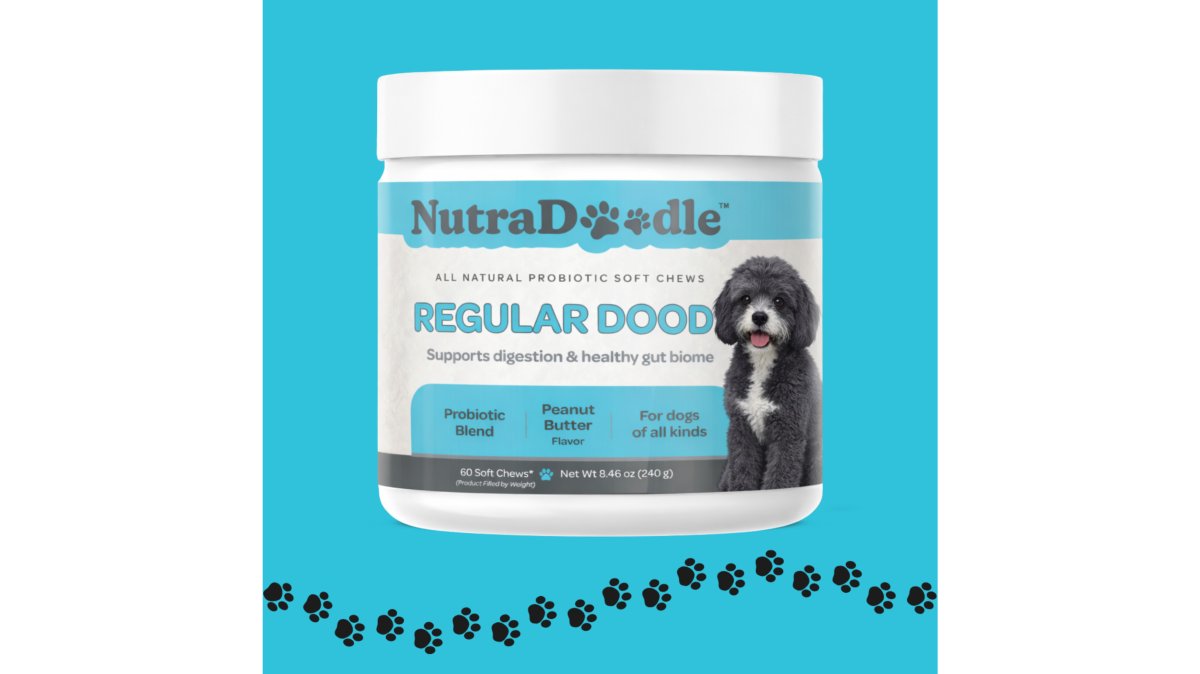
For a product like our Regular Dood Probiotic Soft Chew, the relevant questions are the same ones you should ask of any formula: which strains are named, what CFU is guaranteed, and how the product should be stored.

Best Time to Give a Dog Probiotics
Timing is one of the few levers an owner controls, and it interacts directly with stomach acid. The goal: get live bacteria past the stomach with minimal acid exposure. How much timing helps depends on strain, format, and dog, treat the guidance below as a way to improve the odds, not a guarantee.
Why food changes the acid environment
When a dog eats, gastric pH rises temporarily as the meal buffers acid. That window is why probiotics are given with food: bacteria spend less time in a strongly acidic environment. The effect is real but modest, varying with meal size, composition, and stomach emptying speed.
- Give with a meal rather than on an empty stomach. An empty stomach is at its most acidic, which is the worst-case exposure for a live probiotic.
- A meal with some fat slows gastric emptying. Fat extends the buffered window but also keeps bacteria in the stomach longer, so the net effect isn't automatically better. The reliable point is simply that food buffers acid.
- Mix powders into wet food or a small amount of a palatable topper. This combines buffering with easy administration. Avoid mixing into very hot food, which can damage live cultures.
Timing around antibiotics and other medications
If your dog is on antibiotics, timing matters for a different reason: antibiotics can kill the probiotic bacteria you're trying to deliver. A common veterinary recommendation is to separate the probiotic and antibiotic doses by a few hours and continue the probiotic after the course ends. Ask your vet for the specific interval, since absorption and dosing schedules differ.
Consistency versus perfect timing
Daily dosing matters more than hitting an ideal clock time. Many strains don't permanently colonize the canine gut, so benefit depends on repeated exposure. A dog given a probiotic at the same time each day, with a meal, likely gets more cumulative benefit than one given an occasional dose at a theoretically perfect moment.
What timing cannot fix
Timing improves the odds but can't rescue a poorly formulated or low-count product. If a product doesn't name its strains, guarantee CFU through expiration, or has been stored improperly, even a well-timed dose may deliver few live bacteria.
A practical routine
A simple routine: pick a daily meal, give the probiotic with or just before it, store as directed, and separate it from antibiotics by the interval your vet recommends. Judge results over weeks, not days, if there's no improvement after six to eight weeks, revisit the product and diagnosis with your vet rather than just changing the clock time.
How Long Do Probiotics Take to Work in Dogs
Probiotics don't work instantly; bacteria need time to colonize the gut and establish microbial balance.
Timeline for results:
- Week 1-2: Early signs may appear, but this is often the placebo effect or adjustment to the new supplement.
- Week 3-4: Most dogs begin showing noticeable improvement in stool quality and regularity.
- Week 4-8: Sustained improvement in digestion, reduced gas, and better overall digestive health become apparent.
Not every dog responds on the same timeline. Age, diet, overall health, and severity of digestive issues all play a role; a senior dog with chronic problems may take longer than a young dog with occasional gas.
Regular Dood Probiotic Soft Chew →
If you don't see improvement after 6-8 weeks, the probiotic formula may not be the right fit for your dog. This is when talking to your veterinarian becomes important.
Dog Probiotics for Diarrhea and Digestive Issues
Diarrhea, constipation, and gas are common reasons owners turn to probiotics.
How probiotics address digestive symptoms:
With diarrhea, harmful bacteria often outnumber beneficial ones, causing loose stools.
Gas and bloating happen when harmful bacteria ferment undigested food; beneficial bacteria improve nutrient absorption and reduce fermentation, meaning less gas.
For sensitive stomachs specifically: Dogs with sensitive digestion often have an imbalanced microbiome. Probiotics help restore that balance, which can alleviate ongoing stomach upset.
Choosing a Probiotic Your Dog Will Actually Take
The best probiotic doesn't work if your dog won't eat it.
Soft chews are the most palatable format. They taste like treats, and most dogs eat them willingly.
Our Regular Dood Probiotic Soft Chew is formulated to taste good to dogs. At $33.50, it provides daily digestive support in a format that doesn't feel like a chore.
What to look for on labels:
- Palatability ingredients: Look for chicken, beef, or peanut butter flavoring. Avoid artificial sweeteners.
- Format: Soft chews are easiest to give. Powders mixed into wet food work for less picky dogs.
- Ingredient transparency: You should recognize most ingredients. Human-grade ingredients are a bonus.
When to Talk to Your Veterinarian
Probiotics are generally safe for dogs, but veterinary guidance matters in some situations.
Talk to your vet before starting probiotics if:
- Your dog has a compromised immune system or is on immunosuppressive medications
- Your dog is taking antibiotics (give probiotics a few hours apart)
- Your dog has a serious digestive condition like inflammatory bowel disease
Your veterinarian can recommend specific strains or formulas and monitor your dog's progress.
According to veterinary digestive health research, a balanced approach combining diet, probiotics, and professional oversight produces the best outcomes for dogs with chronic digestive issues.
Many vets are increasingly supportive of probiotics as a complementary tool.
Does your dog struggle with digestive upset or sensitive digestion? At NutraDoodle™, we've designed our probiotic soft chews to survive stomach acid and deliver real digestive support. Our Regular Dood Probiotic Soft Chew contains 5 billion CFU of live active cultures plus prebiotics to support gut health, nutrient absorption, and immune function, all in a soft chew your dog will actually want to eat.
Frequently Asked Questions
Do dog probiotics survive stomach acid?
Yes, quality dog probiotics can survive stomach acid, but not all formulas are equally effective. The key is selecting products with acid-resistant bacterial strains and protective delivery formats. Probiotics with live active cultures that reach your dog's intestinal tract provide the most benefit. Look for products listing specific strains known for acid resistance and check that the CFU count remains viable through the digestive journey.
What's the best time to give a dog probiotics?
Giving probiotics with food offers the most protection from stomach acid. When mixed with a meal, the food buffers the gastric acidity and helps beneficial bacteria survive the journey to the intestines. Consistency matters too, daily dosing maintains a stable gut microbiome. Ask your veterinarian about your dog's specific feeding schedule to optimize timing for maximum probiotic survival and effectiveness.
How long do probiotics take to work in dogs?
Most dogs show signs of improved digestion within 2-4 weeks as the gut microbiome rebalances. Stool quality and regularity often improve first, while relief from chronic digestive issues may take longer. Consistency is essential, skipping doses delays results. If you see no improvement after 4 weeks, consult your veterinarian about whether a different strain or dosage would better support your dog's digestive health.
Can probiotics help my dog's diarrhea or upset stomach?
Yes, probiotics can help alleviate diarrhea and support sensitive stomachs by restoring gut flora balance and promoting healthy digestion. They work by introducing beneficial bacteria that compete with harmful organisms and improve nutrient absorption. However, persistent diarrhea or severe stomach upset requires veterinary evaluation to rule out underlying infections or conditions. Probiotics work best as part of a comprehensive digestive wellness plan, especially for dogs with chronic gastrointestinal issues.